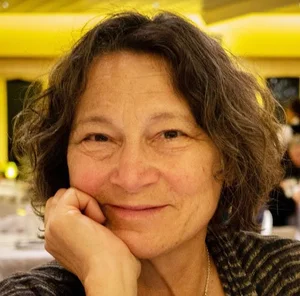
Justice Wears Red Boots: Dorothy Van Soest's Until It's Over
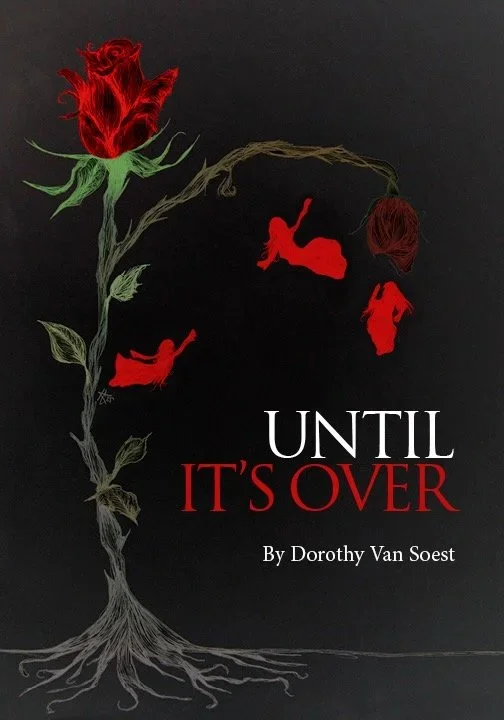
Book Cover for Until It’s Over
I've known and admired Dorothy Van Soest for years. Our conversation about her fourth Sylvia Jensen mystery felt less like an interview and more like two old friends talking too fast, laughing too much, and occasionally forgetting we were recording. Which is exactly how a conversation about a book this good should go.
Released last month, Until It's Over is the culmination of Dorothy's four-book arc. It's the best of the bunch, weaving together sexual violence, Indigenous land rights, uranium mining, and political corruption in a braid so tightly constructed it feels inevitable. At its center are Sylvia Jensen, an octogenarian social worker carrying decades of guilt she never deserved, and JB Harrell, an Anishinaabe journalist raised white and disconnected from his own identity. Dorothy wanted to bring them both to rest. She wanted, as she put it, to give them closure before the series ended.
She did that. And then some.
Sylvia has always been one of fiction's more compelling older protagonists; passionate, dysfunctional in the best ways, willing to break into an attorney's office at night and steal a file for a cause she believes in. (Dorothy cheerfully noted that she does not recommend this as a social work practice.) Over four books, Sylvia became, in her creator's words, "less and less like me and more and more herself,” an outrageous breaker of rules in the cause of justice. In this final installment, she undergoes her most dramatic transformation: she buys herself an expensive espresso machine. She gets new clothes. After a lifetime of "never enough, never enough," she finally understands that she was always enough, and that doing what you can is, in fact, enough.
It sounds simple. It is not.
Dorothy was living a parallel arc in real time. As she was writing Sylvia toward her reckoning, Dorothy herself was working through her own — with the help of a psilocybin-assisted therapy retreat facilitated by a trained and certified social worker. "Just as Sylvia is done and at peace," she told me, "so am I." She's nearly 84. She's got her will in order, her papers in a fireproof lock box, and the kind of clarity that comes from having sorted things out at the level of the soul.
The book's climax is memorable. A corrupt politician — patterned, Dorothy told me with a glint in her eye, on a real sitting senator — has spent years sexually abusing young women, including JB's intern. What follows is a gathering of survivors, a press conference timed before an election, an Indigenous march and rally. And then the women arrive, dressed in red. Sylvia among them, in brand new clothes and red boots. They encircle the man and call him out.
Spoiler alert: He is arrested and the reader is utterly satisfied.
I asked Dorothy where the red came from. Her answer stopped me. She was thinking of The Handmaid's Tale — of the women who wear red at protests, representing power and resistance. And then she mentioned the book's cover: red petals that, if you look closely, are women in red, healing through action, through justice. The color isn't decoration. It's the whole argument.
Dorothy is a retired social work professor. Her training shows up everywhere in this book — in how she constructs character motivation, in how she traces the long shadow of childhood trauma into adult lives, in her insistence that personal suffering and systemic injustice are not separate things. JB's story is based on a real American Indian child lost in the foster care system. The uranium mining storyline grew from Dorothy's research into the cancer rates on Indigenous land near Spokane, where officials are considering reopening a mine. The politician is almost too familiar to be fiction.
Finished with the Sylvia Jensen series, Dorothy is working on a memoir — focused on being raised in a white evangelical church with, as she now recognizes, white Christian nationalist tenets. There's a lot of anger in it. She's working on that too.
Until It's Over is available through your local bookstore, Amazon, and Barnes & Noble. If you'd like to support the Duwamish people who first settled Seattle, Dorothy's local book launch will offer the complete Sylvia Jensen series as a discounted package, with a portion of proceeds going to Real Rent Duwamish.
Meet Dorothy Van Soest
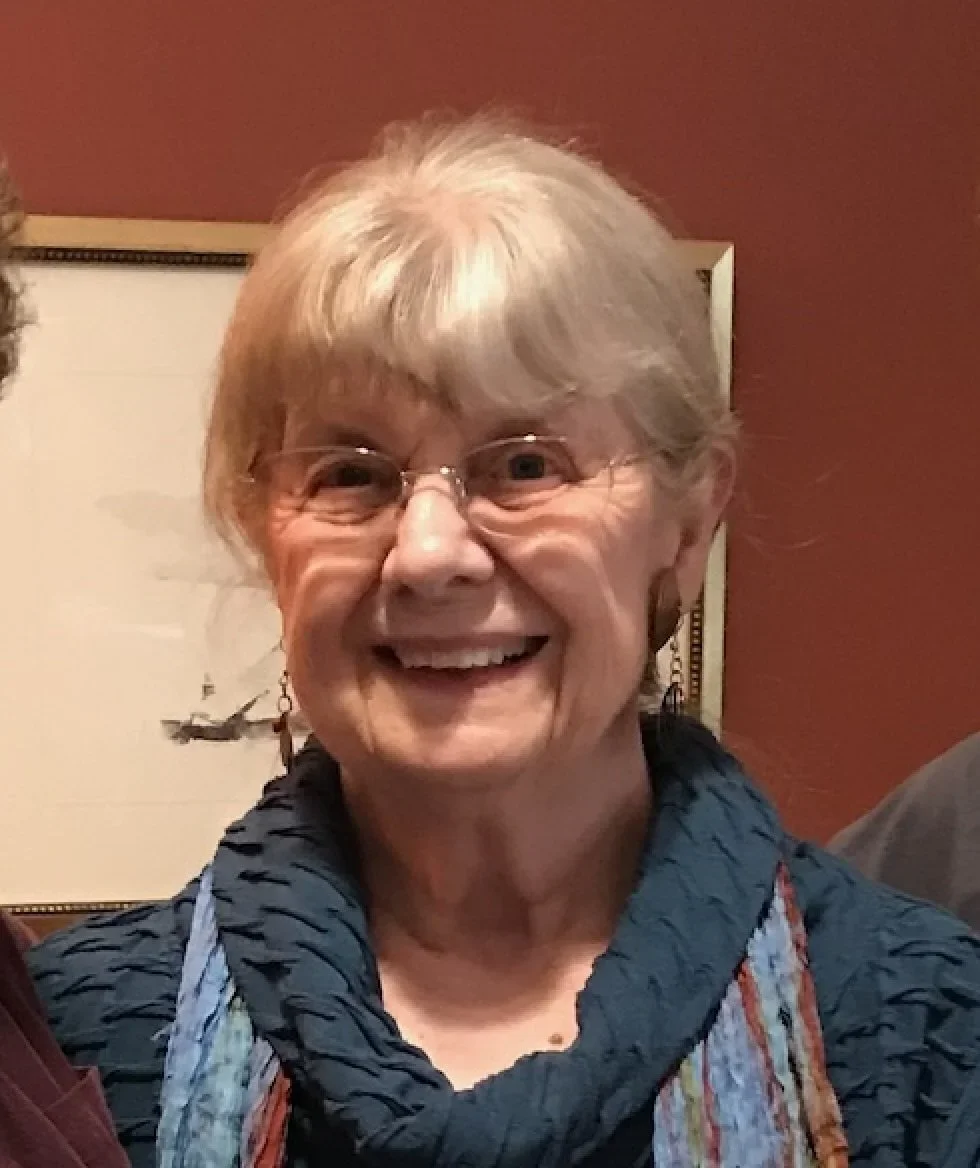
Face Shot of Dorothy Van Soest
This interview has been edited for length and clarity.
Amanda: Your books have always grown from issues you cared deeply about. This one braids together sexual violence, Indigenous land rights, and political corruption. Where did the braid start?
Dorothy: With the characters. I wanted to put Sylvia Jensen and JB Harrell to rest — to give them closure. And I knew they both had childhood trauma that had shaped their whole lives. With Sylvia, it was guilt and over-responsibility rooted in something that happened to a girl she knew. With JB, it was being raised disconnected from his Anishinaabe identity. Once I knew what they needed to heal from, the issues almost found me. I was reading about uranium mining on Indigenous land — the cancer rates, the deaths, the lack of cleanup — and there was a tribe near Spokane facing the reopening of a mine. That became their current crisis.
Amanda: And the sexual violence thread?
Dorothy: That one came from my own life. I was in high school, and I went somewhere I wasn't supposed to go, and a boy tried to pull me into a car. I fought and got away. Years later, during a period of risky behavior, a man followed my car and tried to drag me out at a stoplight. I got away again. And then here I am in my eighties, and I thought: those could have been really, really bad. That's where Sylvia's backstory came from — what could have happened, and what happened to her friend who didn't get away.
Amanda: You've said Sylvia started as a version of you and became more and more herself over the series. How has she surprised you?
Dorothy: Her humor surprised me most. Her ability to joke with JB, to call him on his need to look like a corporate executive. To laugh at herself as an "Indian wannabe" paired with an "Indian don't wanna be." And there's a small moment at the center — you could easily miss it — where she admits to herself that all she really did in the AIM movement was do the dishes. And occasionally sleep with an activist. That just came out of her. I didn't plan it.
Amanda: She's done now. What does "enough" mean, at the end of this arc?
Dorothy: It means you do what you can. As long as there are people being hurt, nobody can ever do enough — you're never doing enough until the problem is solved. But you do what you can, and that's enough. And she was born enough. She wasn't born deficient. She didn't have to prove anything.
Amanda: The final scene is extraordinary — the women in red, the arrest. Why red?
Dorothy: I was thinking of The Handmaid's Tale and the women who wear red to protests, as a symbol of power and resistance. And then there's the cover of the book — those red petals are actually women in red, healing through action, through getting justice. Red felt like the only color that could hold all of that.
Amanda: You mentioned that as Sylvia was reaching her "I am enough" moment, you were undergoing your own parallel reckoning.
Dorothy: Yes. I went to a psilocybin-assisted therapy retreat in Oregon. It was legal, run by a trained and certified social worker. And while Sylvia was finishing her arc in the fiction, I was doing something similar in real life. It helped me understand my anger — how legitimate it is, how not to get stuck in it. Once was enough. It was quite a journey.
Amanda: What do you hope readers carry with them after the last page?
Dorothy: That no one person can solve the big things — genocide, abuse, systemic corruption. But you do what you can. And the doing is enough. Sylvia knows that now. I hope readers can feel it for themselves.
Amanda: You've published all four Sylvia books with Apprentice House. That's a real long-term relationship with a student-run press. What's kept you coming back?
Dorothy: It’s genuinely selective. I think they accept fewr than twenty percent of submissions and the editorial process is real. Every year the staff turns over, so each book gets a fresh team of students doing the review. That can lead to some interesting moments.
What they don't do is marketing — that's almost entirely on the author. But for this launch I'm keeping it local and meaningful. A funky bookstore, the complete series available as a package, and a portion of proceeds going to Real Rent Duwamish, supporting the Duwamish people who first settled Seattle.
Until It's Over is the fourth book in the Sylvia Jensen mystery series, published by Apprentice House Press. The earlier books — The Center, Death Uncharted, and Nuclear Option — can be read independently but reward reading in order.
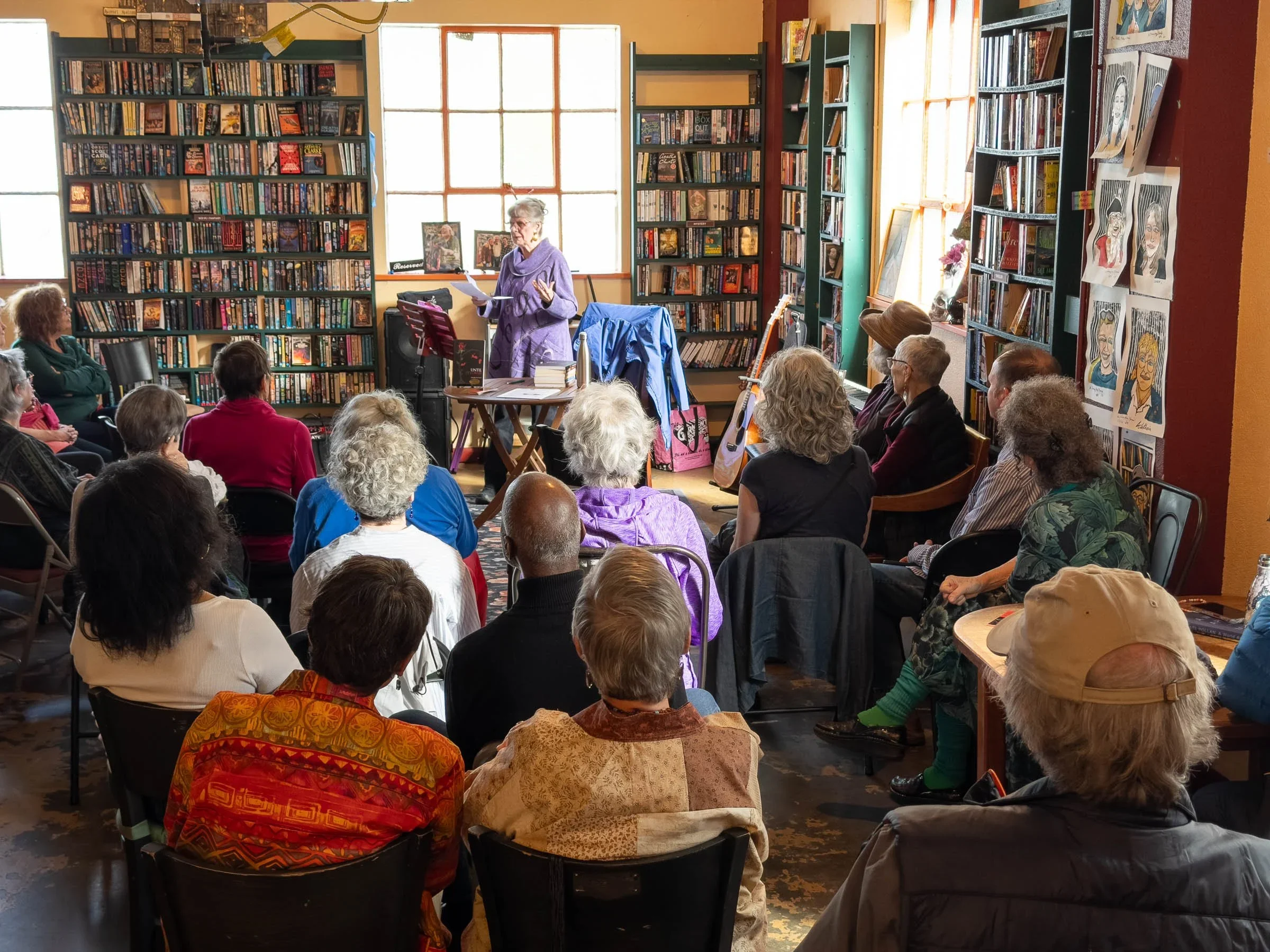
Dorothy reading before an audience